
The Therapy Toolbox - Out and About
The idea of spending several hours a day in physiotherapy over the course of a week can feel daunting, regardless of how active you consider yourself to be. Residential rehabilitation is intensive, but it is not designed to push patients to exhaustion. A key part of the process is managing load and fatigue so that energy is used well and progress remains sustainable.
The focus is on using time and effort effectively, rather than simply increasing workload. Time is structured so that more challenging work is balanced with rest or treatment that takes place off your feet. This allows you to get the most out of each day while continuing to work towards your goals without tipping into unnecessary fatigue.
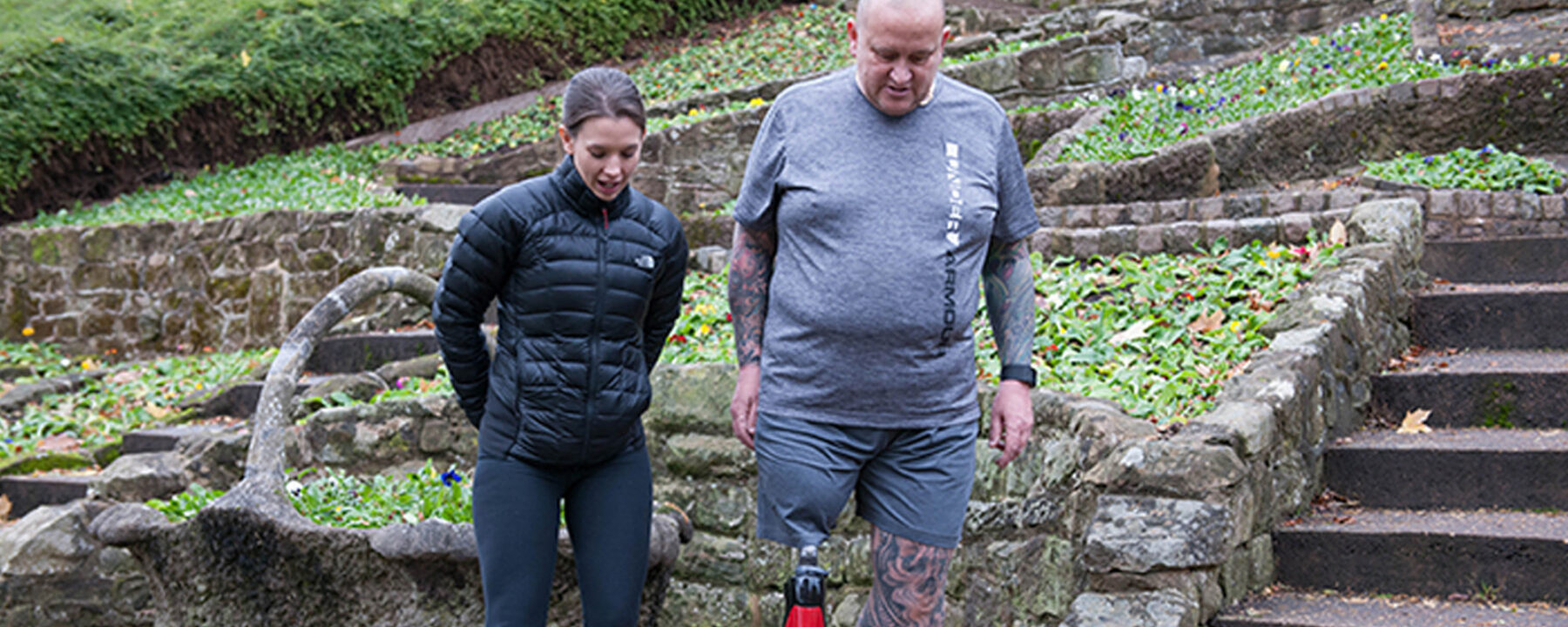
One part of residential rehabilitation that often surprises patients is how much time is spent outside the clinic environment. While the clinic provides a controlled and predictable setting, it does not reflect the challenges most patients face once they return home. Training only in this environment can leave people feeling confident in clinic but uncertain when faced with uneven terrain or busy public spaces.
Because of this, rehabilitation often extends into real‑world settings. Confidence can drop when someone encounters new situations without support, and this is a normal response rather than a failure. Practising these situations during rehabilitation allows skills and confidence to develop while guidance is still available.
At the start of the week, goals are discussed and shaped around what matters most to the individual. This might involve returning to dog walking, feeling comfortable near a riverside path or managing a supermarket without feeling overwhelmed. Even for those who prefer quieter activities, developing the ability to cope with different environments provides useful reassurance later on.
Local outdoor areas are often used as they offer a mix of surfaces and challenges within a manageable space. Parks with gentle paths or steps allow movement skills to be tested in a way that still feels safe and supported, particularly when other people are present, as this reflects everyday life.
For some patients, rehabilitation may include longer walks on uneven ground such as woodland paths. These sessions are often approached with hesitation at first, as they fall outside what patients would normally attempt on their own. With time and support, confidence usually builds quickly, and the sense of achievement can be a significant part of recovery.
Not all goals involve outdoor environments. Some patients want confidence doing activities such as navigating busy shops or using public transport without worrying about balance. Residential rehabilitation provides the time and flexibility to practise these tasks in a realistic way, focusing on function rather than exercise alone.
Please email Beth with any questions you may have - bethl@dorset-ortho.com