
Caroline Lytton
Why Did I Wait So Long? Caroline's Journey with Orthotic Support
Some people spend their lives worrying about what they might lose in the future. Caroline decided long ago that she would focus on what she could do today. Even after being told as a teenager that she might be in a wheelchair by the time she finished university, she refused to let uncertainty dictate how she lived her life.
Today, Caroline works as Chief Operating Officer at the Smith School of Enterprise and the Environment at the University of Oxford. Before that, she spent more than 20 years working in banking in London. After relocating to North Oxfordshire in 2017, she eventually chose to pursue a new career path, while continuing to dedicate much of her spare time to rowing.
While studying at the University of Oxford, Caroline decided to join her college boat club. What began as an opportunity to try something new soon became a lifelong passion.
Although rowing introduced her to the sport, it was coxing that truly captured her attention. It offered a different way to compete and opened the door to opportunities she never expected. She went on to be part of the Oxford Women's Lightweight Rowing Club, beating Cambridge in the lightweight womens boat race in her final year, became a double national champion with Thames Rowing Club and won two gold medals representing England at the Home International Regatta in 2004.
At one stage, a pathway towards Commonwealth-level competition was a possibility, but Caroline chose to focus on her career in finance. Even after stepping away from competitive sport, rowing remained an important part of her life. She went on to coach, support junior athletes and later qualify as a rowing umpire, finding new ways to stay involved in a sport she loved. “It was a way of staying involved and giving back to a sport that gave me so much,” said Caroline. “Somehow I couldn't let the sport go, and the sport couldn't let me go.”
By the time Caroline was achieving success in rowing, she was already living with Charcot-Marie-Tooth disease (CMT). Diagnosed as a teenager in the mid-1990s, she had experienced symptoms for several years before receiving any answers. Running was difficult, her balance was poor and she regularly rolled her ankles. Coaches in gymnastics and ballet had also noticed that something wasn't quite right.
As her symptoms became more noticeable, Caroline was referred to a number of specialists. An orthopaedic surgeon was the first to suspect CMT before she later received a formal diagnosis through neurology services. Receiving a diagnosis gave Caroline some answers, but it also raised a lot of questions about what the future might hold. “I was told at 14 that I might be in a wheelchair by the time I finished university. Receiving this news was horrible and I was absolutely devastated,” Caroline recalls.
Despite what she had been told, Caroline continued living a full and active life. In fact, the years that followed would show just how difficult CMT can be to predict. Caroline has Type 2 CMT and later discovered she carries a novel genetic mutation. Because no one else had been identified with the same mutation, doctors were unable to say with any certainty how her condition might develop over time. “The progression of CMT is so uncertain. No one else has been recorded as having my mutation, so they have no idea how mine is going to progress,” Caroline explained.
As Caroline got older, some of the physical effects of CMT became more difficult to ignore. She underwent orthopaedic surgery at 15 and required further surgery in her early twenties after developing drop foot in her second foot. By that stage, she was catching her toes, tripping more frequently and experiencing falls when she became tired.
It was through the online CMT community that Caroline first heard about the SAFO. By that stage, she had begun experiencing more falls and knew she needed to explore other options, but accepting the idea of wearing an orthosis was not easy. “Being told you need help or admitting to yourself that you need a medical appliance to go about your daily life is really hard,” said Caroline. Accepting that she needed additional support took time, even though she knew it could make a real difference to her mobility.
After receiving her first SAFO through the NHS, Caroline quickly realised the difference it could make to her everyday life. “I got given my first SAFO and thought, why did I wait so long? Why did I wait so long not to fall over my own toes? It was life-changing,” said Caroline.
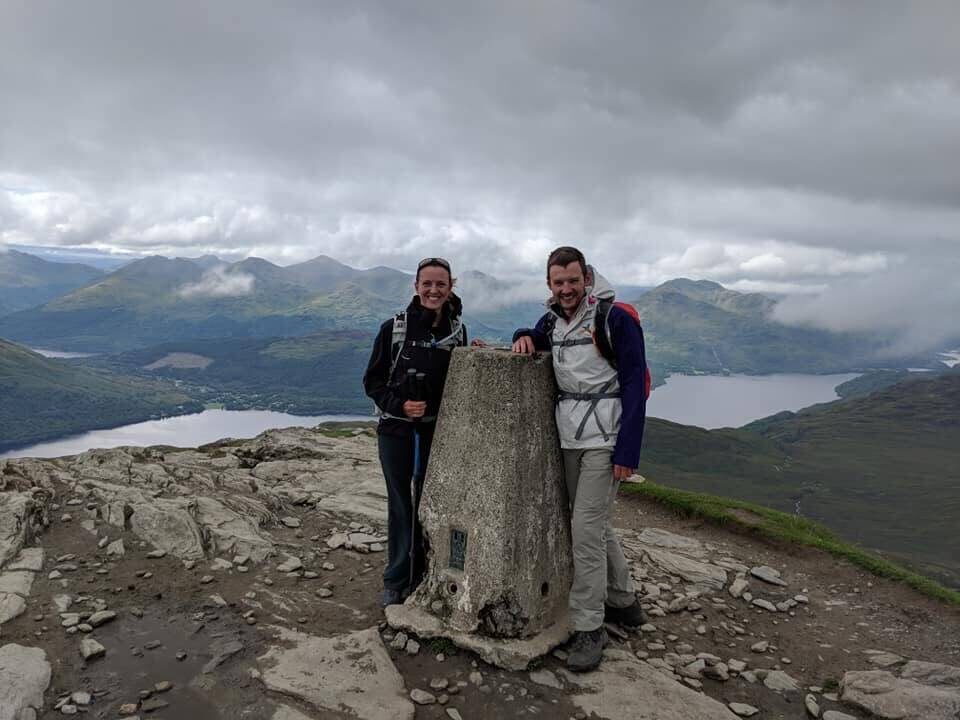
The increased stability transformed her confidence. It allowed her to recover from further surgery and helped her remain active without the constant fear of falling. In 2011, Caroline completed the MoonWalk London marathon with her mother. Eleven years later she completed the Virtual London Marathon and continues to enjoy hiking, long-distance walking, line dancing and regular exercise.
After relocating to Oxfordshire, Caroline began working directly with Dorset Orthopaedic to explore whether there were other orthotic options that could support her active lifestyle. She was introduced to the Ottobock WalkOn range and quickly noticed the difference it made.
Today, Caroline wears bilateral WalkOn orthoses for most activities and still uses her SAFO for occasions where she prefers a less visible brace. Despite living with a progressive condition, she continues to enjoy walking, hiking, line dancing and taking on new challenges. Caroline believes staying active has played an important role in helping her maintain her independence over the years. “The human body is an amazing thing. You find a way to carry on, you find a way to do things,” said Caroline.
The uncertainty surrounding CMT has shaped the way Caroline approaches life. Instead of worrying about what might happen in five or ten years' time, she focuses on what she can do now. “I might lose the ability to be active in the future, so I should do it all now while I can,” said Caroline.
Looking back, Caroline wishes she had accepted orthotic support much sooner. Once she started wearing a SAFO, she realised she had spent years struggling unnecessarily. Just as importantly, she believes a diagnosis should not stop people from enjoying the things they are capable of doing today. “Knowing that you might not be able to do the things you love in the future is exactly the reason why you should do those things today,” said Caroline. “Don't worry about what you might be able to do in five or ten years' time, do what you can do today. Keep doing what you can do because your body will find ways to keep letting you do it.”