
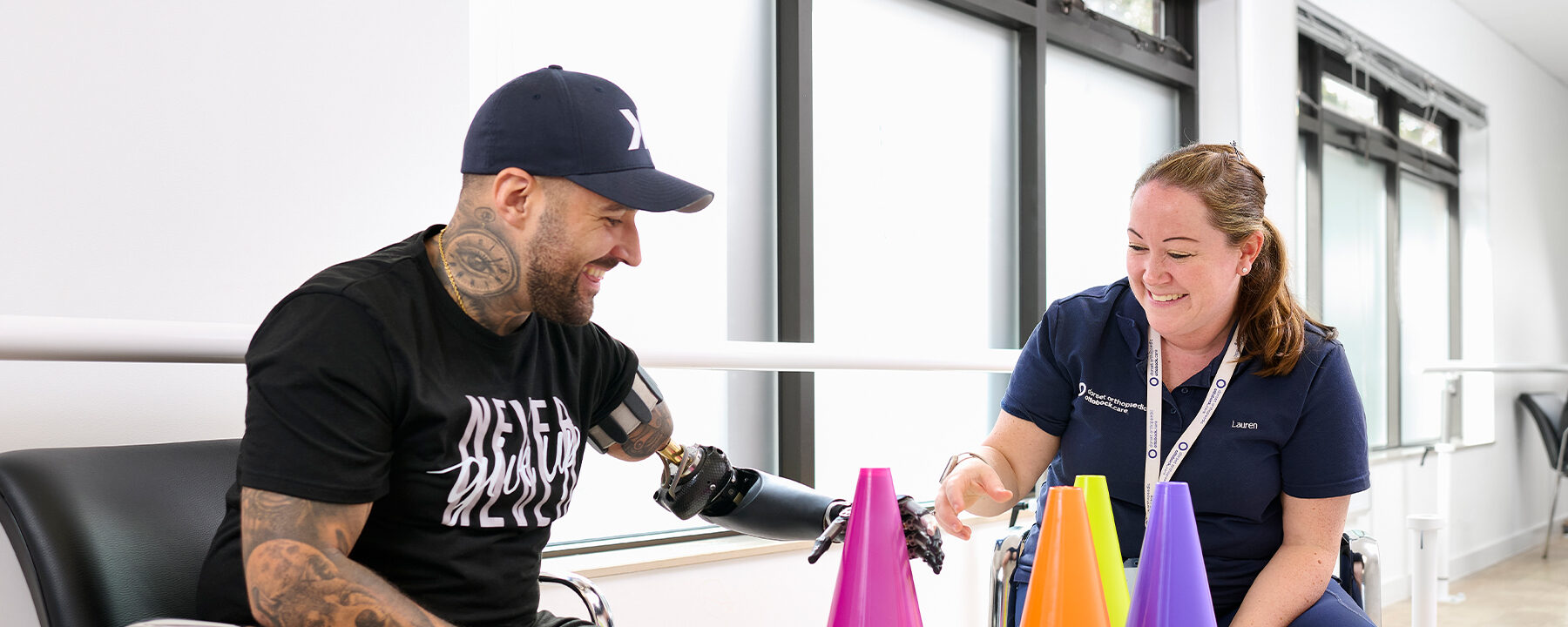
What is Occupational Therapy?
A regulated health and social care profession that focuses on enabling the person with a health issue to continue to participate as independently as possible in meaningful activities. Examples of meaningful activities could be anything from brushing your hair, swimming, playing computer games, driving, going to work or school or making a sandwich. The key point is the activity is most important/meaningful to the individual.
You/your client may have already had some contact with occupational therapy whilst in the early phase of your rehabilitation, maybe some washing and dressing practice or a trip to the kitchen to make a cup of tea. If this is all that you/your client have had, it is most likely that an occupational therapist could do much more to help you with your rehabilitation in many different areas. Some examples of the areas which may help you/your client could include employment, how to adapt environments, both physical and social, how to problem solve, how to do activities around the home and how to manage energy levels and mood.
Occupational therapy for people who have had an amputation
- Early engagement in comprehensive occupational therapy after amputation reduces costs whilst maintaining focus on rehabilitation outcomes. Evidence consistently shows that delayed intervention leads to preventable secondary complications, prolonged rehabilitation and increased lifetime costs.
- The key areas where early occupational therapy intervention delivers return in investment include:
- Pre-discharge home assessments by occupational therapists enable effective, home adaptations, avoiding inadequate reactive changes. Modifications include bathrooms, kitchens, bedrooms, and entrances for prosthetic or wheelchair access.
- Early vocational assessment (6–8 weeks post-injury) helps individuals return to work 4–6 months sooner through transferrable skill evaluation, phased return plans, implementation of reasonable adjustments under the Equality Act 2010 and ergonomic support.
- Occupation-focused psychological support soon after injury reduces clinical depression and anxiety, prevents social isolation, lowers substance misuse risk, improves prosthetic acceptance and restores purpose and meaning to a changed life. This intervention typically avoids costing £20,000–£60,000 in rejected and wasted equipment provision and often avoids dependence on care services.
- Immediate Activities of Daily Living assessment and adaptive equipment provision cuts care needs by 30–50% (£15k–£30k/year), prevents costly institutionalisation (£40k–£65k/year), and optimises energy conservation for daily tasks thereby enhancing mental health and wellbeing.
- Early driving assessment restores independent mobility, saving £3,000–£8,000 in annual taxi costs, supports employment the requires driving, prevents isolation, and costs just £500–£1,500 compared to lifelong transport reliance.
- Early occupational therapy intervention in conjunction with physiotherapy prevents costly complications such as:
- Contractures: Proper positioning and early activity prevent joint contractures that would require intensive therapy or surgery (£15,000-£35,000)
- Phantom limb pain management: Early graded motor imagery and pain rehabilitation reduces chronic pain development (saving £10,000-£20,000 annually in pain management)
- Pressure injuries: Wheelchair skills, positioning advice, and equipment provision prevents pressure sores (each serious sore costs £8,000-£25,000 to treat)
- Falls prevention: Home assessment and mobility training reduces fall risk by 40-60% (each injurious fall costs £2,500-£8,000)
Specific Cost-Benefit Analysis Example
Typical case example: 45-year-old with transfemoral amputation, previously employed office manager.
Intervention
Scenario |
Intervention / non-intervention impacts |
Costs |
Outcomes after 12 months |
Total 5-year cost |
Lifetime impact |
Early comprehensive OT intervention |
|
£6,000 £2,000 £4,000 |
|
£18,000 including follow up |
Sustained employment (20 years = £600,000 earnings preserved), no ongoing care costs (saving £20,000-£40,000 annually), maintained quality of life. |
Without Early Intervention
Scenario |
Intervention / non-intervention impacts |
Costs |
Outcomes after 12 months |
Total 5-year cost |
Lifetime impact |
Without early intervention |
|
£18,000 £15,000 £12,000 £10,000 £30,000 Total £85,000 within first 2 years |
|
£180,000+ |
Lost employment (£600,000), ongoing care needs (£40,000 annually for decades), reduced quality of life, family carer burden. |
The evidence is clear: early intervention is not a cost—it's an investment that dramatically reduces long-term expenditure whilst optimising outcomes for your client.
Recommended Action
Undertake a one-off occupational therapy screening assessment (approx. 1-1.5 hours, on-line only) that will identify the specific areas of occupational therapy intervention required to fully benefit the rehabilitation process.
Screening assessment outcomes:
Following the screening you will receive an occupational therapy intervention plan identifying possible suitably qualified and experienced occupational therapist’s local to you/your client who would then implement the occupational therapy interventions suggested.
Cost of the screening assessment: £350-£640 (depending on complexity).

Trish is an independent occupational therapist and rehabilitation case manager, and has been a qualified occupational therapist for 30 years. Her clinical background has been in community mental health settings. She progressed into occupational therapy management for approximately 10 years within the NHS and charity sectors before deciding to move into independent practice. Rehabilitation case management has enabled her to draw together all her years of both clinical and managerial experience into one area of practice. She also works as a vocational occupational therapist.
Contact: Trish.dowling@kuduhealth.co.uk mob: 07932 389388
Kudu Health Ltd
Registered company: 12206300