
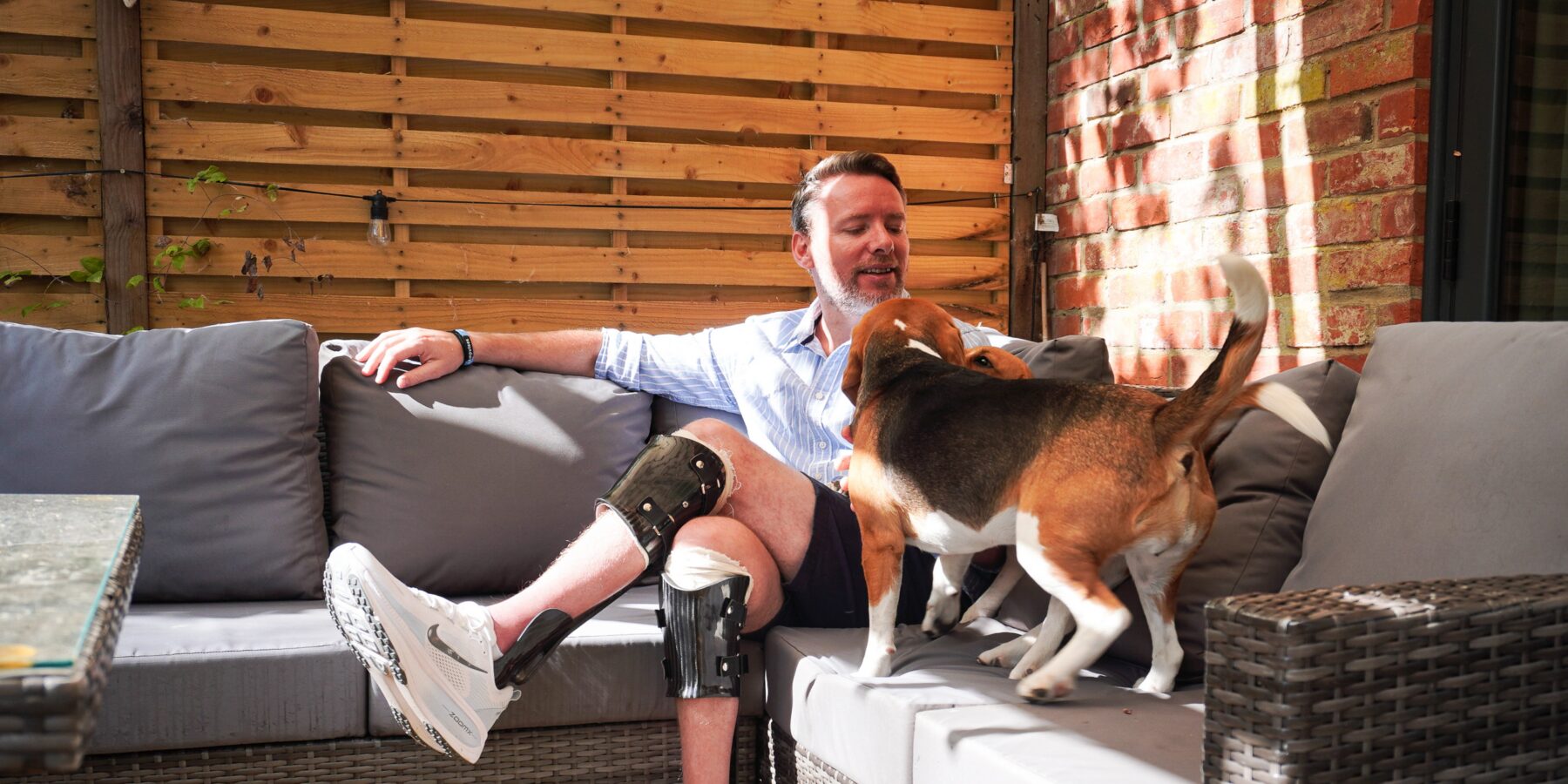
Jon Le Galloudec
The Power of Patience: How an Army Mindset Helped Jon Rebuild His Life
Jon Le Galloudec joined the Army in 1999 at the age of 18 with the intention of making it a lifelong career. He loved being outdoors, staying active and working as part of a team, and over the following years served in multiple countries and conflict zones around the world.
In June 2007, while deployed in Iraq, Jon was shot in the spine during an ambush on a night operation. The injury left him paralysed from the waist down and he was evacuated back to the UK, where he was initially told he would likely spend the rest of his life in a wheelchair.
Whilst the injury left Jonathan facing significant physical challenges, it was the emotional side of recovery that he found most difficult. Accepting that life would look very different and adapting to a loss of independence took time. As Jon explained: "The mental side was far harder than the physical side. Coming to terms with everything and accepting that life was going to be very different was the biggest challenge."
After being transferred to Stoke Mandeville Hospital, Jon began an intensive rehabilitation programme. It was there that specialists identified the possibility that he might regain some mobility and introduced him to ankle foot orthoses (AFOs). Just a few months after his injury, he took his first steps.
While those first orthoses helped him to walk, they were far from perfect. Jon remembers them being uncomfortable and, at times, painful to wear, but the independence they gave him made the difficulties worth it.
Jon was determined to regain his independence and kept working hard throughout his rehabilitation. Looking back, he says patience was one of the biggest lessons he learned. "Recovery is as much mental as it is physical," said Jon. "You've just got to keep going, even when it feels like nothing's changing, and remember that it all takes time."
A major turning point came in 2014 when Help for Heroes introduced him to Ottobock and the IDEO (Intrepid Dynamic Exoskeletal Orthosis). Jon was one of the first people in the UK to receive the device and immediately noticed the difference it made.
Describing the contrast between the IDEO and the orthoses he had previously worn, Jon said, "It was like going from an old banger to a sports car." The device reduced pain, improved his gait, increased stability and enabled him to walk significantly further distances.
It made a difference straight away. Jon still remembers the moment he took his first steps in the IDEO and how much it meant to him. "I cried. For the first time, I could really see what might be possible again,” Jon recalled.
One of the biggest turning points came when Jon realised he could run. He only managed a short distance at first, but it was a moment that showed just how far he'd progressed. "Being able to run again was huge," said Jon. "It proved a lot of people wrong and showed that I could do more than was expected after my injury."
Like many people living with complex injuries, Jon's journey has not been straightforward. In 2016, he suffered another major setback when he broke his back. There were also times when accessing repairs or replacement devices proved difficult, creating additional challenges along the way.
Despite the setbacks, Jon remained determined to maintain his independence. His continued search for the right orthotic support eventually led him to Dorset Orthopaedic, where he worked with Lead Orthotist Kim Pickering and the team to create a custom solution tailored to his needs.
Jon's latest device, a bespoke Ankle Foot Orthosis (AFO), has made another big difference to his mobility. "If the IDEO was like going from an old banger to a sports car, then this feels like going from a Ferrari to a space rocket," said Jon.
Designed to help move his foot forward as he walks, the AFO reduces the effort needed with every step. As a result, Jon can walk further and with less fatigue.
Jon emphasises that the benefits are most noticeable in daily life: "Walking the dog, spending time with the family and doing normal day-to-day things is much easier. It gives me more energy and allows me to do more without feeling as tired."
Throughout his recovery, Jon has refused to let his injury define him. He has continued to set ambitious goals and challenge perceptions of what is possible after a spinal cord injury. Since being injured, he has climbed Mount Kilimanjaro, reached Everest Base Camp and competed in the Invictus Games, winning two bronze medals in swimming.
He also discovered a new passion in 2013 when he attended a Help for Heroes sports camp in Canada and was introduced to para-ice hockey. The sport immediately appealed to him because of its strong team environment. "What I missed most after leaving the Army was being part of a team," Jon explained. "Para-ice hockey gave me that back. It recreated that feeling of belonging and working together towards a common goal."
Since joining the Great Britain para-ice hockey team in 2015, he has represented his country internationally and continues to compete at a high level, while also considering coaching opportunities in the future.
Alongside his sporting achievements, Jon has built a successful career in motivational speaking. After initially speaking through Help for Heroes, he created a presentation called ‘After the Bullet’ and has since delivered talks on cruise ships, at corporate events and in schools across the country.
Speaking to young people has become particularly important to him. Reflecting on a school visit where children recognised him months later, Jon said: "That was when I realised the impact these talks can have. If sharing my story can help or inspire somebody else, then it's worth doing."
Today, after years spent pursuing sporting challenges and personal achievements, Jon's priorities have shifted towards family life. As a father of three, he wants to spend more time at home with his children and partner while continuing to enjoy his regained independence.
Reflecting on his journey, Jon believes the most valuable lesson he can share is the importance of patience: "Time is your greatest healer. Set yourself small goals, stay determined and keep moving forward. Progress takes time, but if you stick with it, you'll get there."