
James Goldsby
From Recovery to Rediscovery: How James Rebuild an Active Lifestyle
From a sudden life changing accident to rebuilding confidence in movement, James’ story shows how the right prosthetic support and rehabilitation can help reconnect people with the life that matters most.
Based on the northern edge of the Peak District, James Goldsby felt he was “living the dream.” As a Regional Director for a railway construction company, he balanced a demanding role with an active lifestyle that was shaped by the outdoors.
“Walking was a big part of my life,” James explained. Living close to the Peak District allowed him to spend his free time exploring, while holidays focused on activities such as skiing, open water swimming and long-distance walking. At the beginning of 2020, he had taken on a new challenge, signing up for a triathlon and starting to train with friends.
On 20th July 2020, everything changed. While cycling with his wife in the Peak District, James was hit by an oncoming motorcyclist. He sustained multiple serious injuries and was traumatically amputated at the scene. A passing first aider stopped to help before he was airlifted to a trauma centre in Stoke.
In the days that followed, the reality of recovery became clear. Although he valued the initial care he received, James quickly began thinking about life beyond hospital. “My motivation was getting back to normal, and, for me, living the dream was normal,” James said. “I wanted to get back to work and get back to the things I used to do.”
Early physiotherapy provided a starting point, but it was clear he would need more specialist support to reach his goals. A family friend suggested seeking legal advice, which led to the appointment of a case manager. “The support provided really did take away a huge amount of stress and really allowed us to focus on the future,” James recalled.
With this support, practical changes were quickly implemented, including help with daily tasks and plans to adapt the family home. Rather than relocating, James and his wife chose to remain where they were, creating a space better suited to his long-term needs.
Around this time, James was introduced to Dorset Orthopaedic and immediately noticed a different approach to rehabilitation. “One of the things that stood out to me was the integrated rehabilitation from the whole team,” said James. “I was now speaking with both the prosthetist and physiotherapist in the same room.”
During the initial physiotherapy sessions, clear and measurable goals were set to track his progress. A six-minute walk test was used to assess improvement, showing that before physiotherapy he could walk 200 metres, which increased to 242.5 metres after treatment. He also reported a significant improvement in socket comfort throughout his rehabilitation. Additionally, there were noticeable improvements in James’ social and relationship wellbeing, as well as his overall environmental wellbeing.
After six weeks of being with Dorset Orthopaedic, he started the prosthetics process. James recalled the moment he was first able to walk again after his accident: “The first time I used my prosthesis was in the gym, which was a really emotional day for me and my family. This was the first time I could walk since my accident.”
Like many rehabilitation journeys, progress was not linear. A period of prosthesis overuse led to skin breakdown, temporarily setting him back. However, it reinforced the importance of managing long-term limb health and working closely with his clinical team.
As his rehabilitation continued, James explored components that would support his goal of returning to longer walks. With careful adjustments and ongoing support, he gradually increased his walking distance and confidence, eventually achieving 23 kilometres on his prosthetic leg.
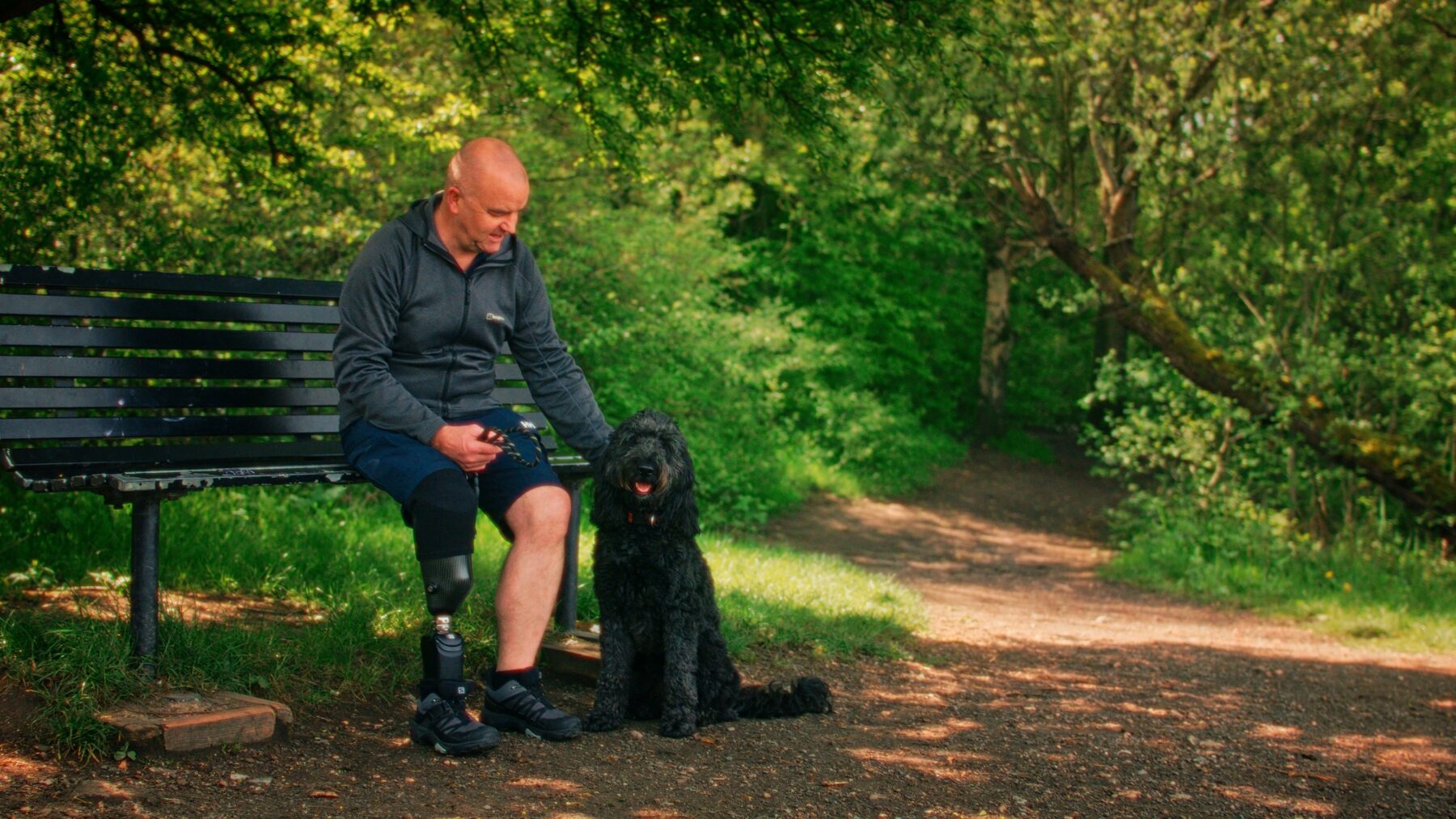
Today, being active remains an important part of his life. James and his wife got a dog shortly after the accident, creating a daily routine around walking. He has returned to skiing and open water swimming, and also taken on new challenges, including sailing trips abroad.
Returning to work has been another important milestone for James. Although he now works reduced hours, he has been able to adapt his role around his energy levels and create a suitable work/life balance.
Reflecting on his journey, James has made it clear that while life may look different, it is far from limited. “There is a life after this, you just have to try to remain as positive as possible,” he said. “It’s all about having a positive mindset and stepping out of your comfort zone.”
For James, the combination of the right support, team and a clear sense of purpose has made all the difference in helping him rebuild not just his mobility, but his lifestyle.